Celebrating Día de los Muertos in Mazatlán
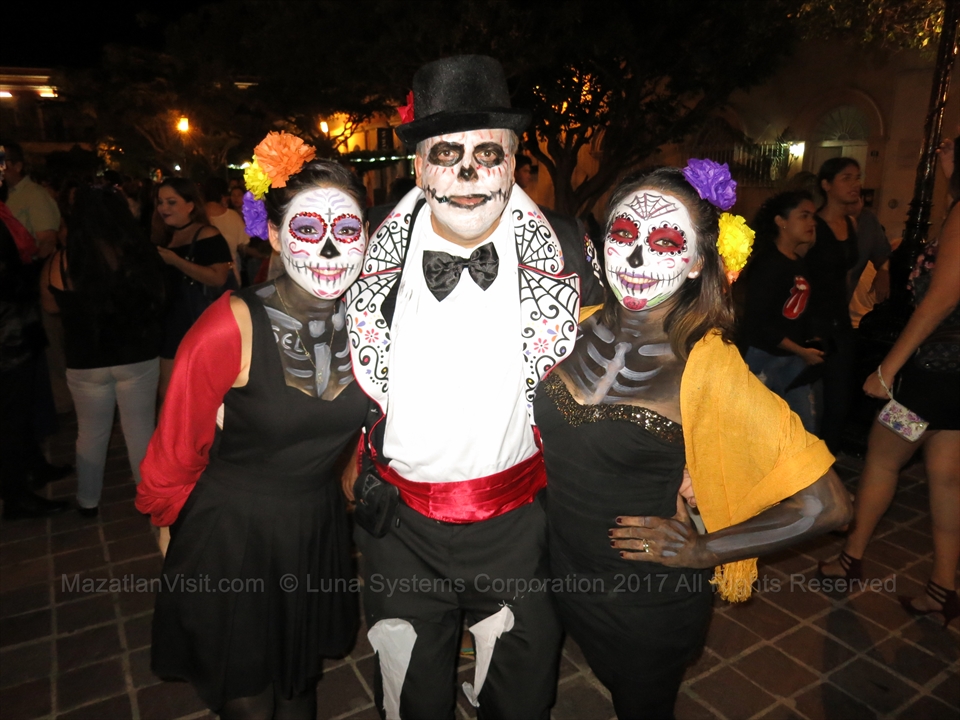
The iconic Day of the Dead (Día de los Muertos) is observed in Mazatlán with a brilliant, world-class cultural parade, artistic neighborhood altars, and beautifully detailed Catrinas displayed across public spaces.
In Mexico, the holiday formally encompasses November 1st and 2nd. November 1st (Día de los Inocentes) is dedicated to honoring departed children, while November 2nd observes departed adults. Local families traditionally spend time visiting community cemeteries during these days to decorate gravesites, share food, and play acoustic music.
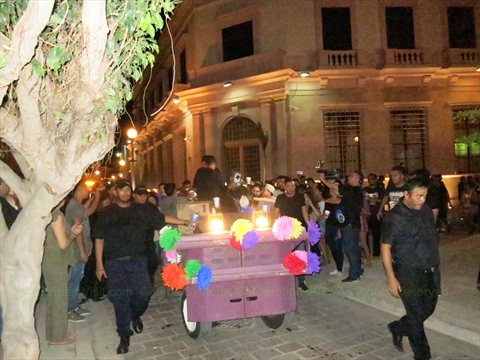
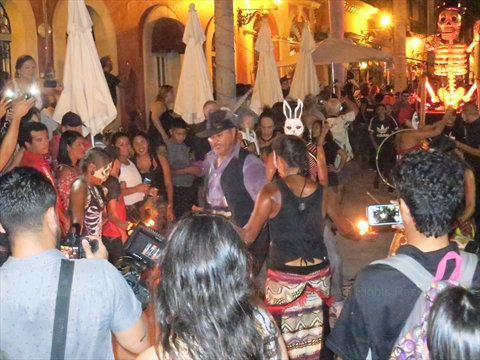
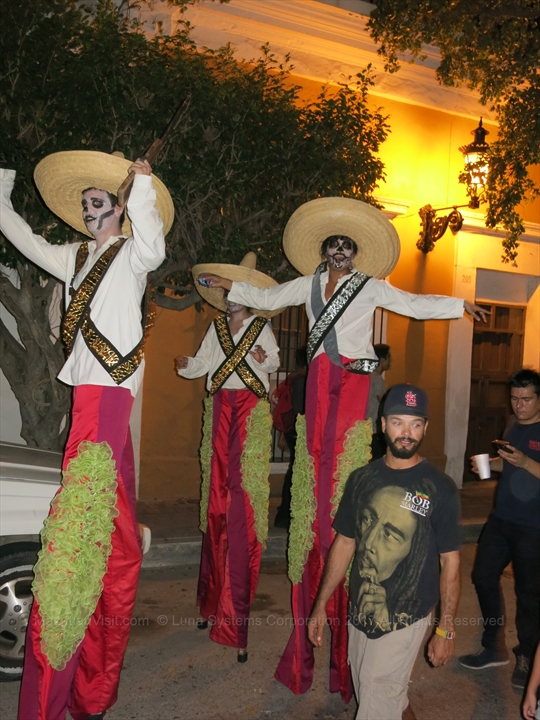
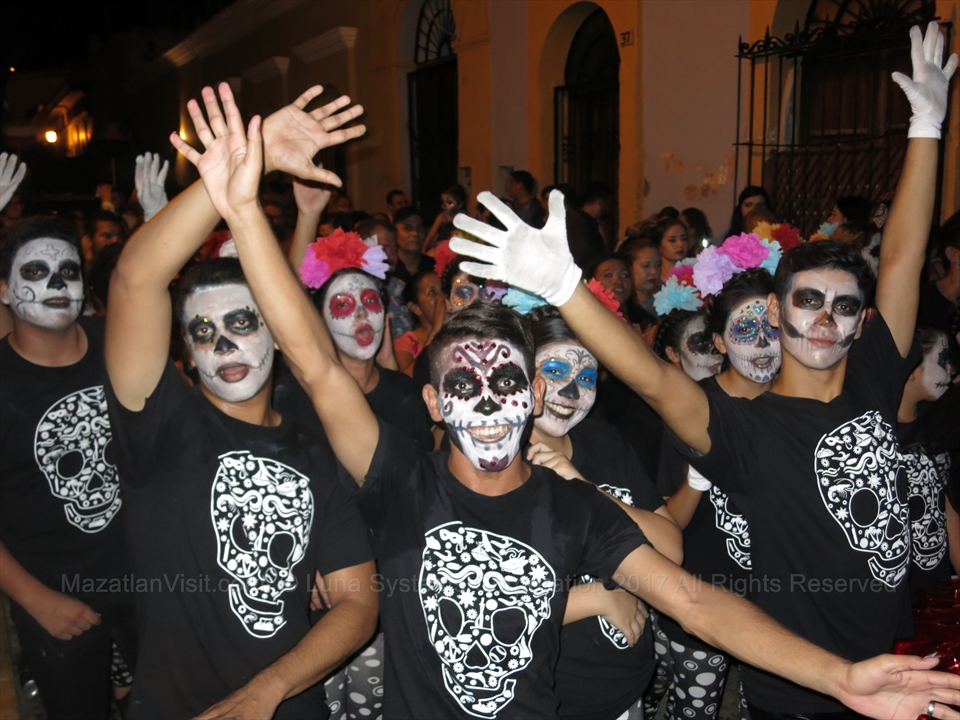
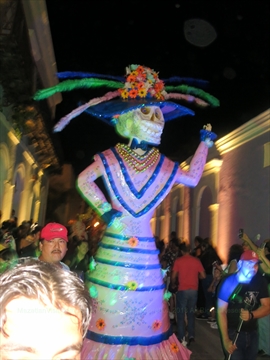
The grandest public celebration in the city is the annual Day of the Dead Parade (Callejoneada), featuring theatrical floats, synchronized dance troupes, and spectacular firework arrays over the old town. For the current 2026 season, the grand parade is projected to take place on Sunday, November 1, 2026.
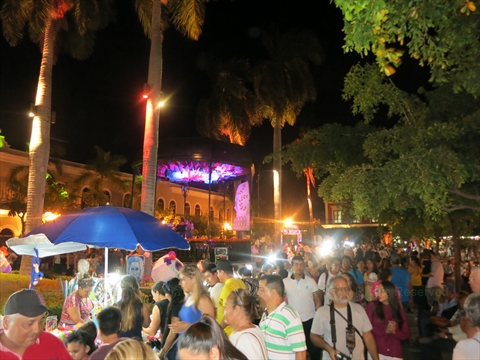
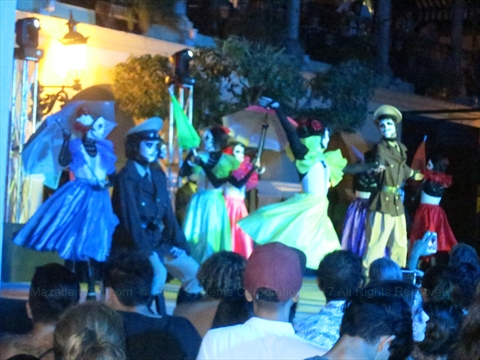
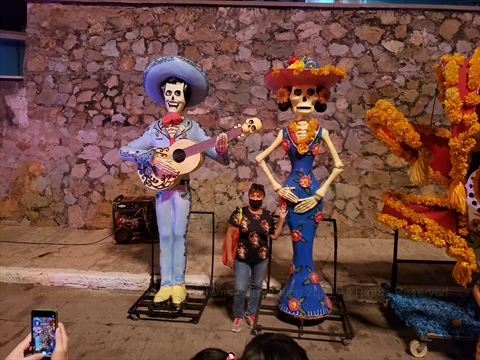
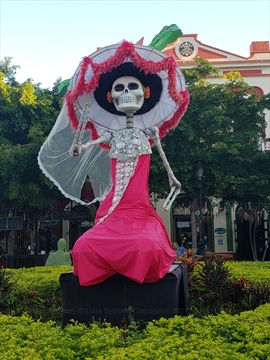
The undisputed heart of all holiday activities is historic Plaza Machado. The square gets heavily decorated with complex candlelit altars and giant skeleton installations, typically playing host to street performers on parade night.
The neighboring Angela Peralta Theatre routinely hosts an immersive, indoor artistic show during the early evening hours immediately leading up to the main street procession.
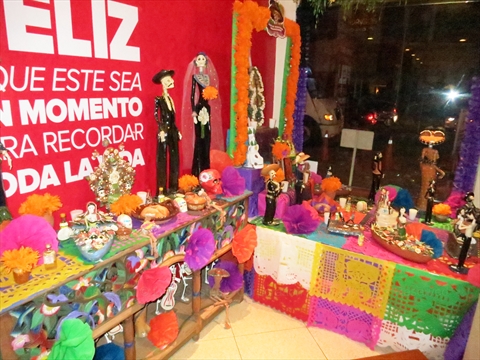
For a week or more prior to the holiday, local businesses and neighborhood homeowners build private altars in their entryways and lobbies. These beautiful, layered exhibits are highly worth viewing!
Navigate our curated videos, photo galleries, and historical archives below to plan your trip.
Mazatlán Day of the Dead Parade Video
Watch a complete overview highlighting the unique atmosphere, costumed dancers, and musical sets from our parade archives:
2026 Day of the Dead Parade Details
The grand 2026 Day of the Dead Parade is scheduled to step off on November 1, 2026, around 8:00 PM. Major vehicle route closures across the perimeter take effect early starting at 5:00 PM.
The artistic conceptual theme for the upcoming 2026 floats and costumes will be announced by municipal planners closer to autumn.
Official Parade Route Map
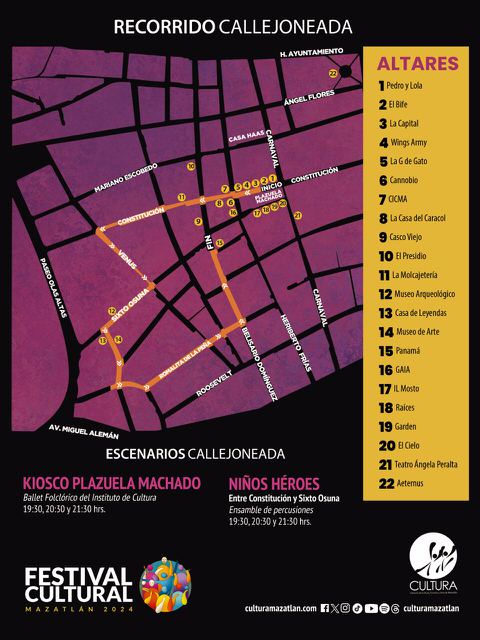
The parade follows the historic, colonial path running straight through the heart of Historic Old Town (Centro Histórico).
The route typically forms outside Plaza Machado near Pedro and Lola Restaurant, moving along Constitución before turning left on Venus, right on Sixto Osuna, and left past the Museum of Art. It then sweeps back along Romanita de la Peña and finishes down Belisario Domínguez, wrapping up within a block of the main plaza core.
This classic downtown configuration ensures an incredible, intimate experience as performers wind past historic 19th-century properties.
Day of the Dead Parade Galleries
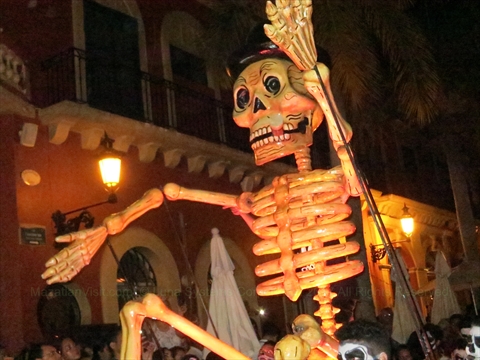
Day of the Dead Festivities at Plaza Machado
The historic plaza acts as the ultimate destination anchor for all holiday events. Every year, the central kiosk and open spaces are beautifully configured with decorations built around the season's core theme.
Outdoor seating tables across all surrounding Restaurants are completely booked out on parade night. We highly recommend securing table reservations months in advance or arriving early in the afternoon to lock down an alfresco vantage point. While indoor seating is occasionally available, you will lose visibility of the main street spectacles, and spaces can feel warm as seasonal humidity lingers.
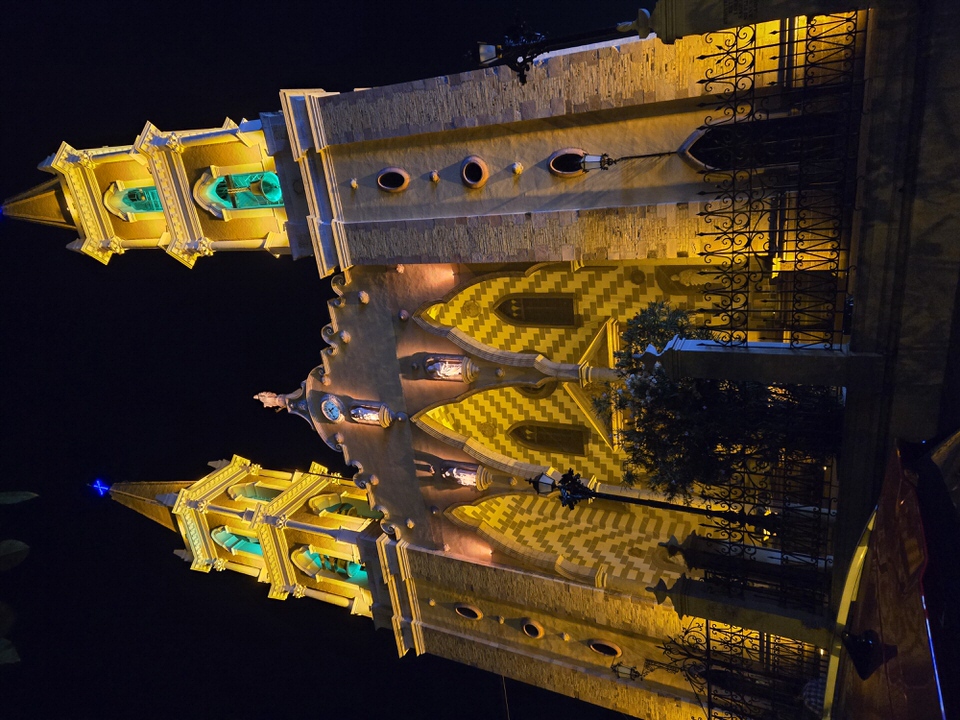
The grand Angela Peralta Theatre sets up beautiful gallery installations and schedules pre-parade indoor shows. Entrance is typically ticketed; municipal organizers routinely distribute these admission passes for free at the box office window a few days prior to November 1st.
The Tradition of Altar Exhibits (Ofrendas)
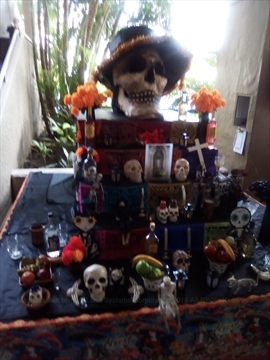
Throughout the week leading up to the holiday, boutique hotels, storefront shops, art galleries, and residential homes build magnificent, deeply tiered Altar Exhibits (ofrendas) dedicated to deceased loved ones or cultural icons.
These multi-tier arrangements are meticulously decorated with bright orange marigold flowers (cempasúchil), flickering candles, decorative sugar skulls, and the favorite food and drink items of the departed. Strolling the alleyways of Centro Historico during these days provides a wonderful, respectful glimpse into authentic Mexican heritage as families welcome home spirits.
The Seasonal Mazatlán ArtWalk
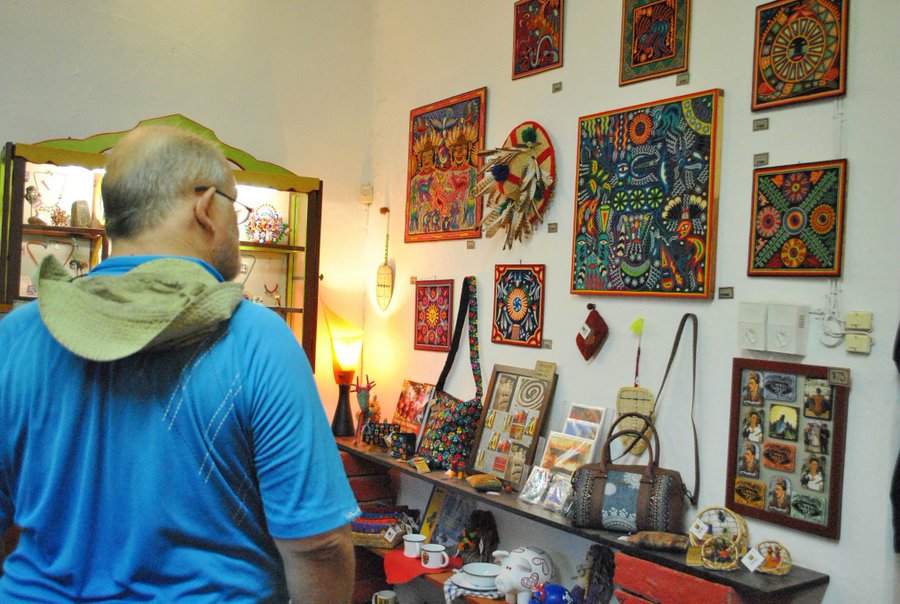
Launching concurrently with the early November holiday schedules is the annual Mazatlán ArtWalk circuit series based inside the historic quarters.
This program offers a free, self-guided walking map layout through private art galleries and artisan workspaces. It makes for an exceptional evening activity to combine with your holiday sightseeing tour of downtown. Read our dedicated breakdown: Open the ArtWalk Guide
Day of the Dead Catrinas
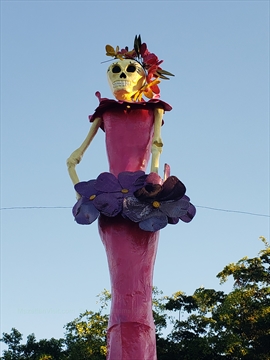
The grand, elegant skeletal lady known as La Catrina stands as the ultimate, globally recognized artistic symbol of Mexico's Day of the Dead heritage.
Originally created by illustrator José Guadalupe Posada as a satirical drawing of an upper-class skeleton dressed in sophisticated French attire, the figure has evolved into a beautiful emblem of the holiday's philosophy: that death handles all social classes equally.
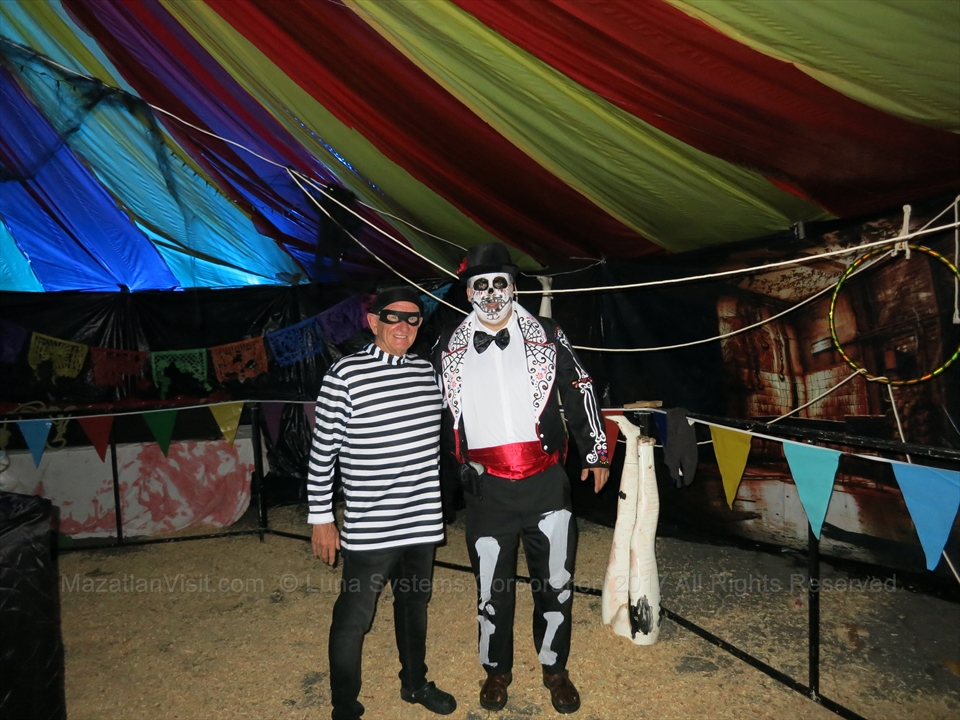
During the festivities, numerous local residents, performance dancers, and visitors apply striking face paint and dress in exquisite, formal matching gowns to embody La Catrina along the public parade routes.
Evolution of Past Day of the Dead Events in Mazatlán
Over the past decade, the structure of Mazatlán's Callejoneada parade has adapted significantly to match booming tourism numbers:
The Modernized Route Era (2021–Present): Starting with the 2021 post-pandemic recovery cycle, municipal planners shifted the parade's path to begin outside Sister Cities Park, traveling along the wide coastal lanes of the Malecón and Olas Altas before completing its loops inside Plaza Machado. This shift successfully accommodated larger, more complex carnival-style floats and massive spectator crowds.
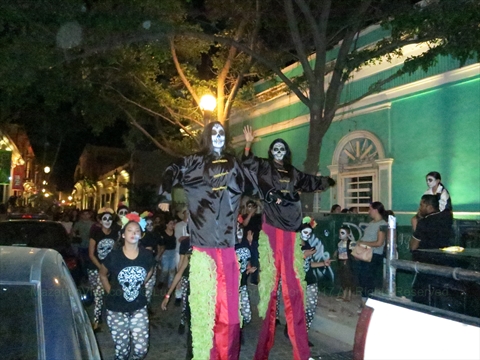
The Classic People's Parade Era (Pre-2020): Prior to the 2020 global event cancellations, the parade route ran completely inside the tight, cobblestone avenues of Historic Old Town (Centro Histórico). It functioned entirely as an immersive community walk, where spectators directly mingled shoulder-to-shoulder with stilt walkers, fire dancers, and brass bands. A unique highlight of this classic format was a series of custom tractors pulling beer kegs, providing free drinks to the marching crowds.
Historical Themes: Core curatorial themes have historically highlighted regional heritage—such as 2022's *La Catrina, Queen of Mexican Traditions*, or the famous 2017 tribute dedicated exclusively to legendary Mazatlán-born movie star and singer Pedro Infante.
Traditional Cemetery Visits (Día de los Fieles Difuntos)
On November 1st and 2nd, independent travelers seeking an authentic, respectful window into the holiday's spiritual depth can visit the municipal cemeteries (panteones) located around the city. Local families spend hours thoroughly cleaning family headstones, painting borders, arranging fresh marigolds, lighting candles, and placing favorite meals or tokens of the deceased. It remains an incredibly grounding, peaceful family tradition completely separated from the commercial festival atmosphere of the nightclubs.